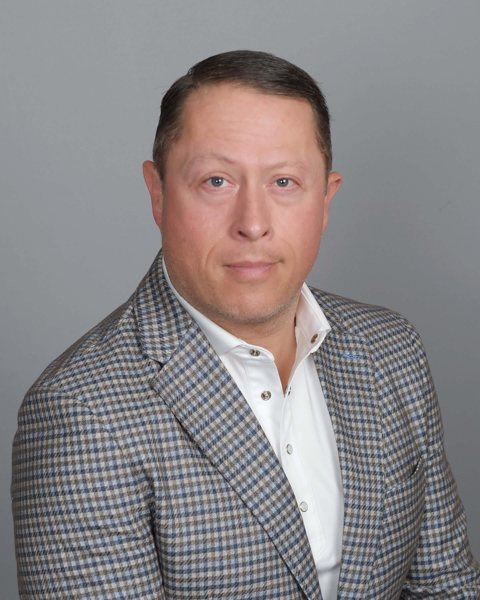
VP of Strategic Development
Jarrod Erwin
30 years in private equity and venture capitalDrives strategic growth and partner relationships with family offices and partner networks, with an emphasis on transparency and long-term value.


Your confirmation email with the meeting link is on its way. Here are three things to do before we talk.
Private Strategy Call
Summit puts its own capital into every venture, on the same terms as its partners.
Past performance is not indicative of future results. All direct oil and gas participation involves substantial risk, including loss of principal.
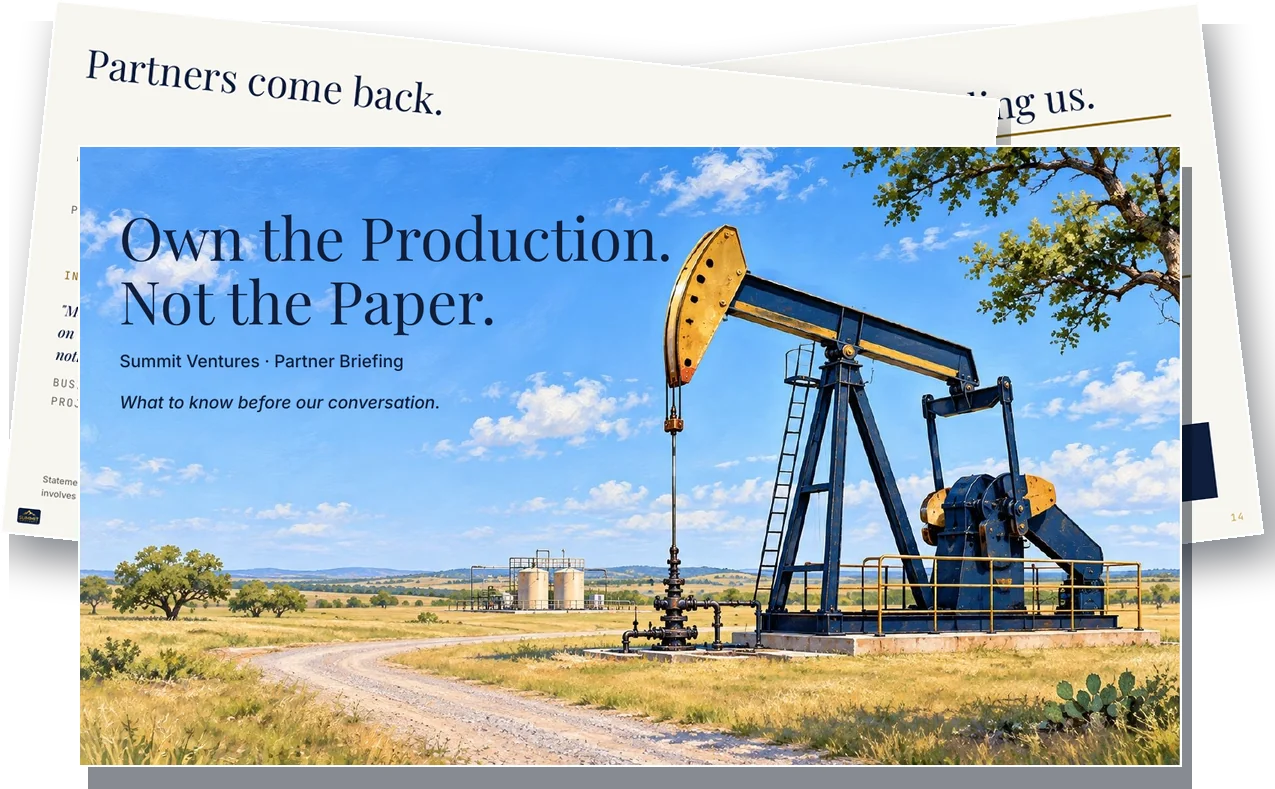 18 pages · PDF
The Summit Ventures Partner Briefing covers what we would want you to know before our conversation. It takes about ten minutes to read.
Proven fields, modern engineering and disciplined execution, with the exit planned before we buy in most projects.
Proven assets with production history, known reservoirs and a clear redevelopment path.
Every asset monitored, maintained, measured, optimized and reported.
Each asset reviewed continuously to decide when to hold, optimize or exit.
The next project starts with the same discipline.
Four tests every project must pass
Is it a proven producing zone, confirmed by nearby wells?
Who runs the field day to day, and what is their track record in that basin?
Are pipelines, water disposal, roads and power already in place?
Do the sponsor, the operator and the partners win or lose together?
Monthly production reports, JIBs, K-1s on time. I've been in deals where you hear nothing for a year. This isn't that.
Business owner, post-exitSecond project with Summit
They do what they say they're going to do. When something changed in the field, I heard it from them first.
Developer, JacksonvilleThird project with Summit
They understand the rock and the operations. Every question I asked had a real answer, not a pitch.
Family office, DallasSecond project with Summit
Statements reflect individual partners' experiences, are not paid testimonials, and are not indicative of future results.
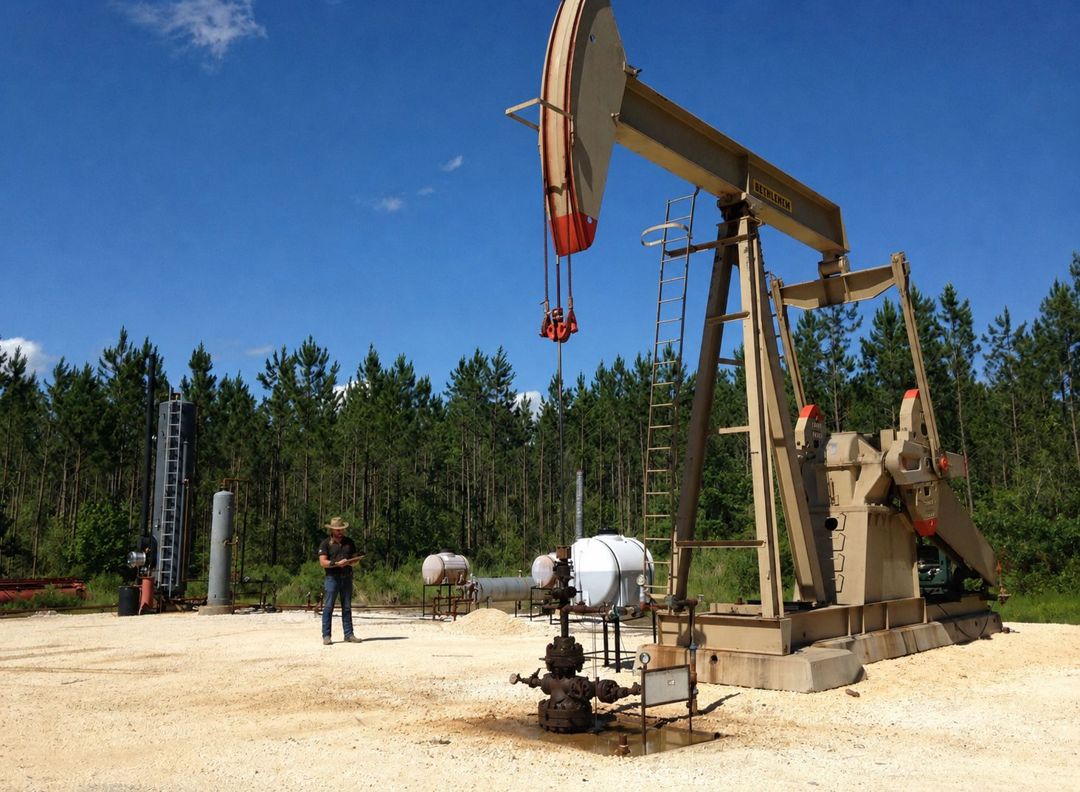
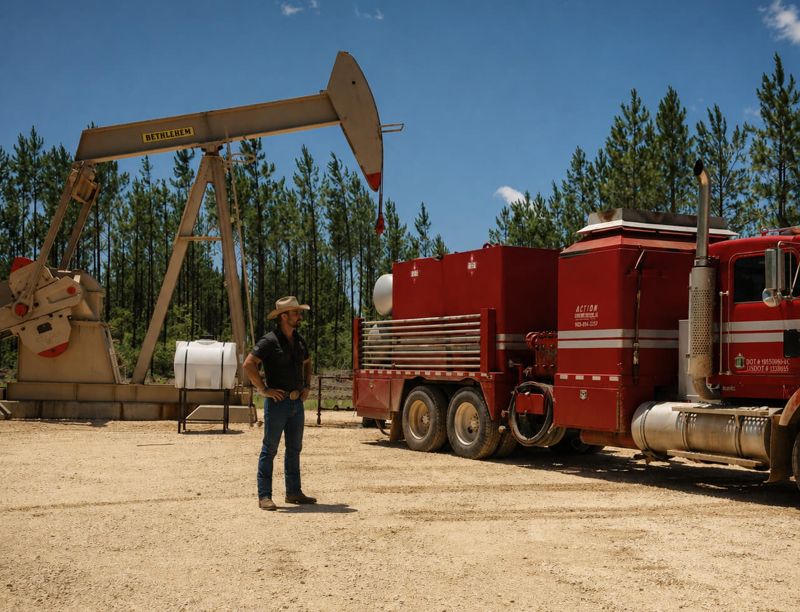
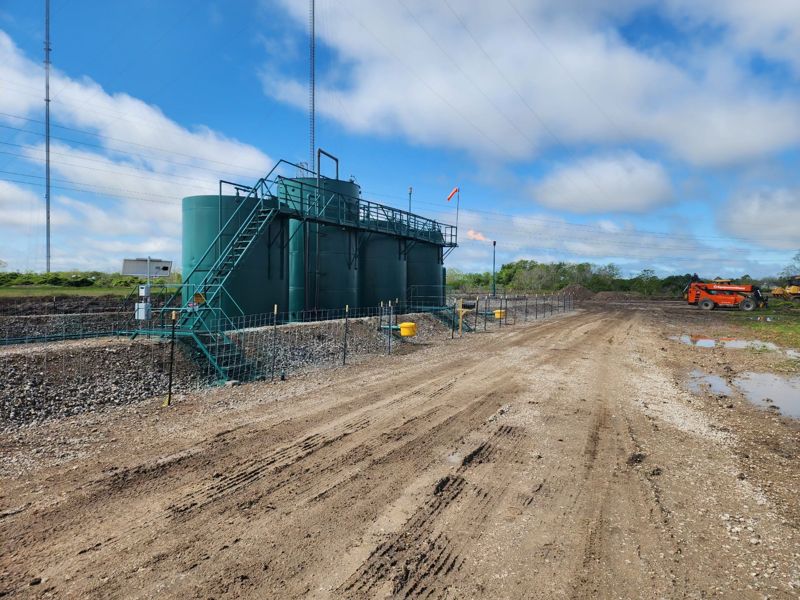
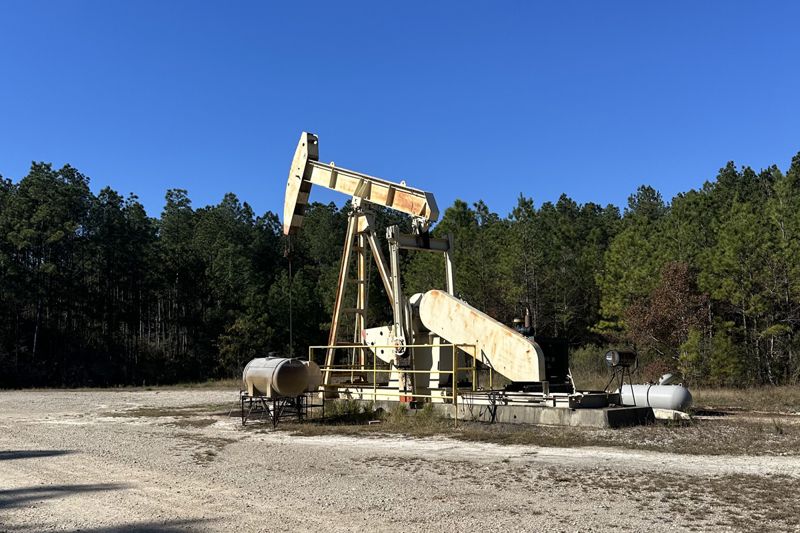
Our focus is on the ground: the wells, the equipment and the people who keep proven fields producing.
Drives strategic growth and partner relationships with family offices and partner networks, with an emphasis on transparency and long-term value.

Entrepreneur and operating executive who has founded, scaled, and exited multiple companies. Former Xerox Dealer Advisory Board member. Leads Summit's strategy and partner relationships.
Has led finance and operations for public and private companies, including energy. Led the financial investigation, alongside the FBI, that uncovered a multi-million-dollar embezzlement scheme. MBA, University of Houston.
A film from our team about who we are, how we work, and why we put our own capital next to our partners'.
 Watch the film
In the 1960s, Shell drilled a series of wells in Hardin County, Texas. Because of gas regulations at the time, Shell chose not to perforate several zones it knew held hydrocarbons. As the field changed hands over the decades, those zones stayed untouched.
Our operating partner identified the bypassed intervals, acquired the field through a low-cost transfer, and went back into one of the original Shell wells.
Shell drills the field and leaves known productive zones unperforated.
The field is acquired and one original well is recompleted. From that single recompletion:
Development expands across the field. Together, the twelve additional wells produced:
The asset was sold once the field had been fully redeveloped.
Historical production from one field, shown to illustrate the redevelopment approach. Not a current offering and not indicative of future results. Shell is named for historical context only; no affiliation or endorsement is implied.
Bring these to your call. How plainly a sponsor answers tells you as much as the answers themselves.
Do you put your own capital in, and on what terms?
Who operates the wells, and what's their history?
What data comes with the field?
What's the lift cost, and how does the project hold up at lower prices?
How often will I receive reporting, and what will it include?
What's the exit plan, and what happens if it doesn't go to plan?
What's gone wrong on past projects, and how was it handled?
Bring these to your call.
We'll answer every one.A 30-minute conversation with Jarrod Erwin about your goals, how Summit's joint ventures work, and your questions. No commitment is asked. If there is mutual fit, next steps include due diligence materials and follow-up Q&A calls, and your advisor is welcome to join those.
No. The first call is mutual discovery. Any specific opportunity is governed by a separate Confidential Information Memorandum, subscription documents, and individual review.
Participation is limited to individuals and entities that qualify as accredited under Rule 501 of Regulation D. Summit Ventures takes reasonable steps to verify that status before any commitment is finalized.
A working interest is an ownership interest in an oil and gas property. It carries a share of production revenue and responsibility for a proportionate share of operating and development costs. That is different from owning shares of an oil company on the stock market.
You join as an active JV member with defined ownership and governance rights set out in the JV documents, and you are expected to participate in material decisions. Experienced operators handle day-to-day field work. You also share in the venture's costs and risks.
Yes. Summit puts its own capital into every venture, on the same terms as its partners.
Monthly production reports, joint interest billings (JIBs), and year-end K-1s.
Commodity prices, production decline, operational setbacks, illiquidity, and the possible loss of some or all of the capital you commit. Capital may be committed for years with no market to sell quickly. Summit underwrites for these risks, and no approach eliminates them. The Partner Briefing explains how we approach each one.
Both come up often. Whether a specific interest qualifies for 1031 treatment depends on the interest, the timing, and your situation. Participating through an IRA can create unrelated business taxable income (UBTI). These are questions for your own tax advisor and qualified intermediary, and we're glad to cover how the structure works on the call.
No. Direct oil and gas ownership has specific treatment in the U.S. tax code, but whether any of it applies depends on your facts and current law. Summit does not provide tax advice. Please consult your own tax advisor.
Summit Ventures is committed to disciplined investing, transparent communication, and aligned partnerships.